Anaheim and Orange County
Anaheim roofing permits and Title 24
A reroof in Anaheim is permitted work, and the paperwork is more predictable than the internet suggests. Here is the actual path, with the City's own documents beside it.
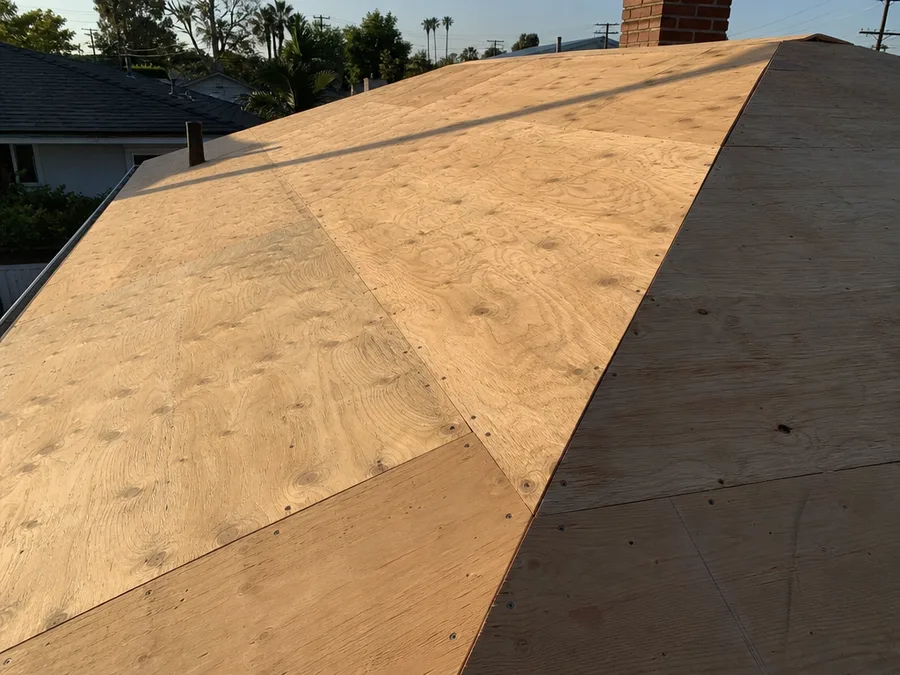
Anaheim homeowners planning a reroof run into two separate things wearing the same name. One is the City's permit process, which is administrative and knowable. The other is the set of code requirements a reroof pulls in, which is where most of the confusion in this market lives, including a widely repeated rule that does not exist.
This page covers both. It is the page every other page on this site links to instead of re-explaining the rules, which keeps the compliance material in one place where it can be kept current.
When an Anaheim reroof needs a permit
Replacing a roof covering is permitted work in Anaheim, and the City treats it as residential construction with its own application and its own document set. What a reroof does not need is planning or zoning approval, which the City states plainly: there is no planning or zoning approval required for reroofs.
Small repairs are the grey area, and the honest answer is that the line is not published as a square-footage rule you can apply yourself. The Permit Assistance Center answers that question directly and it is a short phone call. A contractor who tells you confidently that no permit is needed, without having asked, is telling you what is convenient.
How the reroof permit works, step by step
The sequence below comes from the City's own reroof information handout, which is a process document rather than a code document. Two things are worth knowing about it before you rely on it: it is form B820, it is dated March 2010, and it describes what it calls the new 2007 California Building Codes. Use it for how the counter works, not for what the code currently says.
- Plan check, only if the roof is heavy. A plan check is required only where the proposed roof weighs 6 pounds per square foot or more. When it applies, the City asks for two sets of stamped and signed engineered calculations showing the structure will carry the new load, plus plans showing the location, size, spacing and material of any additional framing.
- The application. It asks for the roofing material and the total number of squares to be covered, where one square is 100 square feet. For tile roofs it also asks for an ICC-ES evaluation report number, and for a complete tear off it asks for the size and thickness of the sheathing going back down.
- Who may pull it. A permit may be obtained by the property owner, by a contractor, or by an employee of either carrying current workers compensation insurance. The owner of a single family residence may obtain one without workers compensation insurance.
- Two inspections. Roof sheathing, requested with code 102, and final, requested with code 199. Dry rot and termite damaged wood has to be replaced before the sheathing inspection, not after it.
The City also lists a self-certification program on the roofing permit page, and the 2010 handout describes a reroof self-certification pilot for single family reroofs that need no engineering calculations. Whether it is still running is a question for the counter, and it is worth asking, because it is the sort of thing that changes without the website changing.
CF-1R for reroofs, and what Title 24 asks for
Title 24 is California's energy code, and a reroof over a certain share of the roof surface brings its cool roof requirement into play. The compliance document is a CF-1R, the certificate of compliance, and Anaheim publishes a CF-1R for reroofs among the documents on its roofing permit page.
One caution, and it is the reason this section is shorter than it could be. The specific reflectance and emittance values that satisfy the requirement are set by the Energy Code for each climate zone, Anaheim moved to the 2025 code cycle for projects submitted from 1 January 2026, and the version of the form posted on the City's page is a scan whose file metadata dates from 2010. We are not going to publish numbers here that we could not re-verify against the current Energy Code this week. Ask the counter which form and which values apply to your project, and treat any contractor quoting values without naming the code cycle with the same caution.
The 25 percent rule does not exist here
Four of the roofing searches people run in this city ask what the 25 percent rule is. It is the most repeated piece of roofing folklore in the market and it is not California law.
The number 25 does appear in the state residential code's roofing chapter, four times, and every one of them is a slope: two and a half units vertical in twelve horizontal, which the code writes as a 25 percent slope. It is the minimum pitch for clay and concrete tile, among other coverings. It has nothing to do with how much of a roof you are allowed to replace.
The threshold that actually exists is 50 percent, measured across a year, and it is the one drawn below.
50%
Replace more than half the roof area in any one-year period and the whole covering has to meet the current fire classification, with Class C as the floor outside the designated wildfire areas.
Two practical consequences. A full reroof is over that line by definition, so the requirement is simply part of the job. And a large repair can cross it without anyone intending to, particularly two large repairs in the same twelve months, because the code measures the share over a one year period rather than per job.
How many layers of roofing are allowed
This is a real question with a genuinely local answer, and it is worth explaining why you will find three different answers online.
The state code treats a roof replacement as removal of the existing layers down to the deck, with narrow exceptions that permit certain existing membranes to stay in place, and a separate section that permits a recover in defined conditions. Anaheim's own 2010 handout gives a one-layer-over-one-layer answer, citing the 2007 code. Neighbouring cities publish their own procedures, and some of them are stricter.
So: do not take a neighbouring city's rule as Anaheim's, and do not take a 2010 bulletin as the current code. Ask the counter about your address. It is a two minute call and it is the difference between a tear off and a recover on the quote.
Anaheim's wildland-urban interface, in two freeways
The fire side of the roofing code depends on where the house is, and Anaheim has an unusually checkable answer to that.
The City's own environmental documentation states that, under the Anaheim Municipal Code, all areas within the City of Anaheim located east of SR-55 and south of SR-91 are designated as part of the City's wildland-urban interface. That is a boundary anyone can apply to their own address with a map in about a second.
Inside those areas, Chapter 7A of the California Building Code governs construction for exterior wildfire exposure, and the City describes its provisions as including Class A roofing materials for structures in designated fire hazard severity zones. Outside them, the residential code's floor is Class C.
What this page will not tell you is which zone your parcel is in. That mapping is done at parcel level by the state and adopted locally, the maps have been revised recently, and it is not a determination this site makes or verifies for anybody. The City's fire hazard severity zones page is where that enquiry belongs.
Which code cycle your project falls under
Anaheim enforces the 2025 California building standards codes, including the building, residential and energy codes, for projects submitted on or after 1 January 2026, amended locally under Title 15 of the Municipal Code. The City publishes that on its current building codes page.
This matters more than it sounds, because a great deal of roofing content online still describes the previous cycle, in which some of these sections were numbered differently. If a quote or an article cites a code section, check which edition it is citing.
| What it turns on | The figure | Published by |
|---|---|---|
| Roof area replaced before the whole covering must meet the current fire classification | More than 50% | 2025 California Residential Code R902.1.2 |
| Period that share is measured across | Any one year | 2025 California Residential Code R902.1.2 |
| Minimum classification outside the designated wildfire areas | Class C | 2025 California Residential Code R902.1.2 |
| Proposed roof weight at which the City requires an engineered plan check | 6 lb per sq ft | City of Anaheim, Reroof Information Handout (B820, March 2010) |
| Inspection request codes on a reroof permit | 102 and 199 | City of Anaheim, Reroof Information Handout (B820, March 2010) |
Where this fits with the rest of the site: roof replacement is the job that crosses the 50 percent threshold by definition, roof repair is where it gets crossed by accident, and tile underlayment replacement crosses it while leaving the tile itself in place. This site passes your request to a roofing contractor working in Anaheim; it does not pull permits and does not do the work.
The plan check trigger and the tear off requirement on this page are also two of the larger variables in a quote, so they belong in a price conversation as well as a permit one. Roof replacement cost in Anaheim covers where they show up in a figure and what else moves it.
Permit questions people actually search
What is the 25% rule for roofing?
There is no 25 percent rule in California, and the only place the number appears in the state residential code chapter on roofing is as a slope: two and a half units vertical in twelve horizontal is described as a 25 percent slope, which is the minimum pitch for clay and concrete tile. The threshold people are reaching for is 50 percent of roof area within any one year period.
Do I need a permit to replace my roof in California?
A reroof is permitted work, and in Anaheim the City lists it under residential construction with its own application and documents. The roofing permit page is the place to start, and the Permit Assistance Center answers the edge cases by phone.
How many layers of roofing are allowed?
Ask the counter, because this is genuinely a local question and the published answers disagree. The state code treats a roof replacement as removal of the existing layers down to the deck, with defined exceptions permitting a recover. The City's own reroof handout gives a one-layer-over-one-layer answer, but it dates from 2010 and cites the 2007 code, so it is a description of process rather than of current rules.
What is a CF-1R for a reroof?
It is the Title 24 certificate of compliance for the energy requirements a reroof triggers, and Anaheim publishes a CF-1R for reroofs among the documents on its roofing permit page. Because the City moved to the 2025 code cycle at the start of 2026, ask the Permit Assistance Center which version of that form the counter wants before you fill one in.
Is my house in the Anaheim wildland-urban interface?
The City's own environmental documents state that under the Anaheim Municipal Code, all areas within the City located east of SR-55 and south of SR-91 are designated part of the City's wildland-urban interface. Whether a specific parcel also sits in a mapped fire hazard severity zone is a separate question with a parcel-level answer, and the City's fire hazard severity zones page is where to start. This site does not determine or verify any property's zone.
What does a roofing permit cost in Anaheim?
Fees are published by the City rather than set by a contractor, and they are the one part of a reroof price that you can look up before anybody quotes you. The permit page links the fee schedule, and a quote should say clearly whether the permit is included in the figure or billed on to you at cost.
Not sure which of these applies to your roof?
Describe the work you are planning and roughly how much of the roof it touches. A roofing contractor working in Anaheim can tell you which of the thresholds above your job runs into.